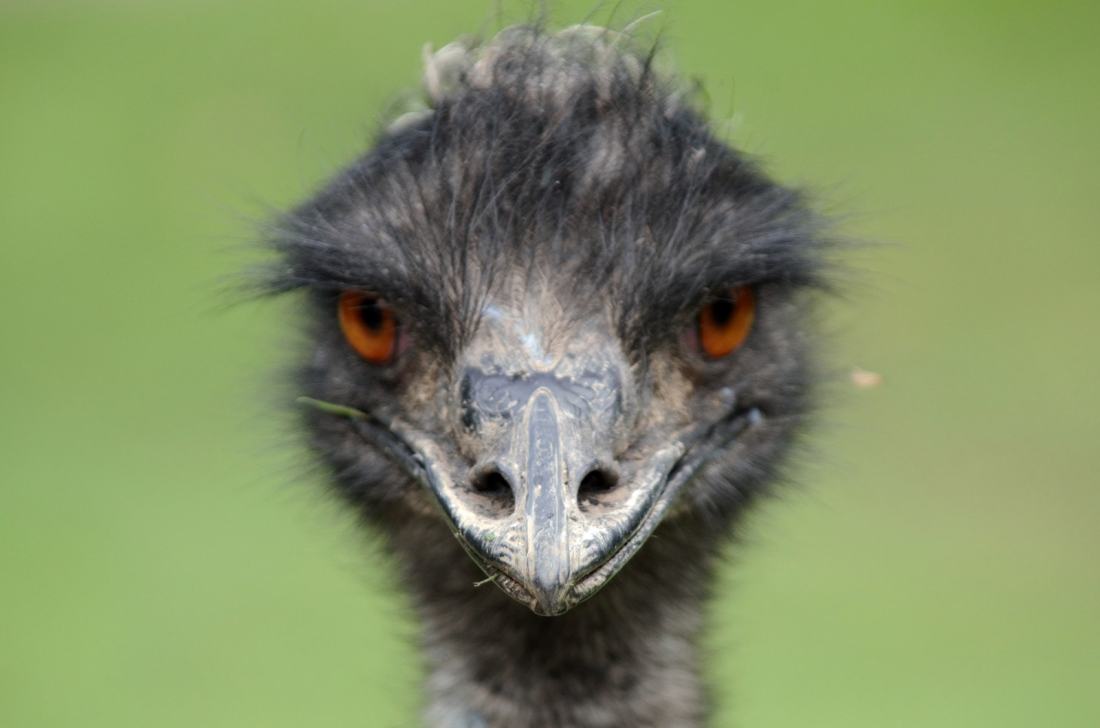
 A young Hispanic man came into an emergency room in Austin, Texas some years ago with bad cuts and bruises shouting “Pollo gigante!” (Giant chicken!). It wasn’t, it was just an emu.
Texas had a love affair with emu ranching in the 1990’s aided by government funding, a huge promotion as an alternative to beef for food in addition to which they provided oil for lotions, skin for leather, feathers for clothes and enormous emerald eggs for four-person omelettes.
It was a classic boom and bust scenario. The price of a breeding pair reached $28,000 in 1993. Not taken into consideration was the fact that emus are very good breeders.
Emus lay 5-15 eggs in each clutch and can keep doing so for more than 16 years. With 12 surviving chicks a year, a single breeding pair can spawn 133 breeding pairs within five years and nearly 36,000 within ten years.
The population boomed at precisely the moment it was becoming clear that Americans had no appetite for a new red meat. By 1998 emus had no value.
Some were culled, some were neglected, and some fences were cut. The number of feral emus is debatable but they are not many. There are several small known mobs in remoter parts of Texas, at least one in Wisconsin and one in California.
So you don’t have to holiday at home to have the exciting experience of watching a 100 lb bird slide up your bonnet heading for the windscreen at 60mph.
Full credit to The Economist Magazine article ‘The great Texas emu bubble’ – What if tulips had been six feet tall and ran at 50km an hour?’ published Dec 18th, 2018
https://www.economist.com/christmas-specials/2018/12/18/the-great-texas-emu-bubble

 rodgerinnewyork.com